
The Desert Landscape as Scene of Loss and Return
The Little PrinceShows how a particular spot in the African desert becomes the permanent coordinates of both the Little Prince's appearance and his disappearance.
increasing Bearing strength in each event
 decreasing
Bearing strength in each eventdecreasingLandscape First Drawn
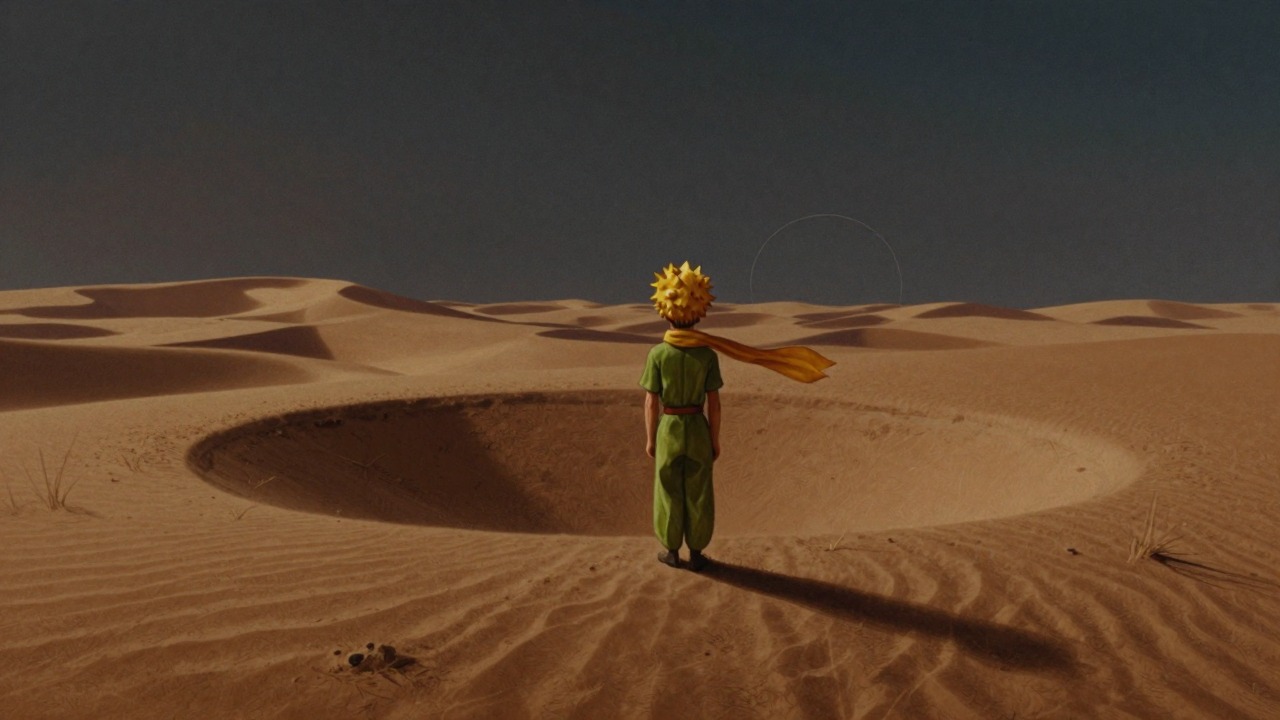
Landscape First Drawn
Context
The narrator has drawn the landscape before, a bare African desert with a well-like emptiness. The drawing marks the physical site where the Little Prince appeared on Earth. The same image repeats in the epilogue.
Development
The first drawing is an act of witness. It places an impossible meeting on a map of ordinary geography, making the fairy tale concretely locatable. The sand holds no footprints, only memory.
Significance
The drawing anchors the prince's story in the real African desert. It allows readers to imagine finding the exact spot on a future journey.
Spotting the Meeting Place
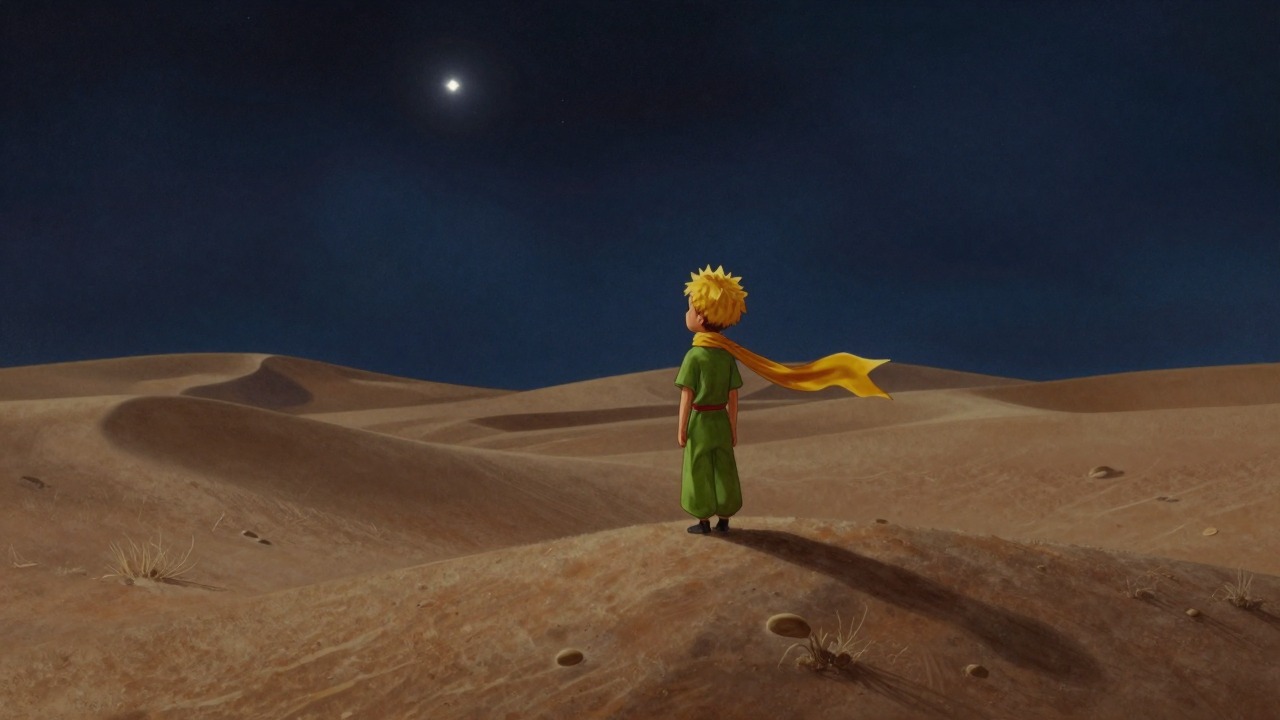
Spotting the Meeting Place
Context
The narrator identifies the landscape as the place where the Little Prince appeared on Earth and disappeared. This is not a general desert but a precise spot under a specific star, a kind of earthly coordinate for a celestial arrival.
Development
The exactness of the location gives the story an archaeological feel. If one traveled to the African desert and waited under the right star, the prince might appear. The landscape is therefore not empty; it is charged with possibility.
Significance
The meeting place becomes sacred ground. It turns geography into destiny, making the desert the gateway between the prince's planet and Earth.
Empty Sand at Daybreak
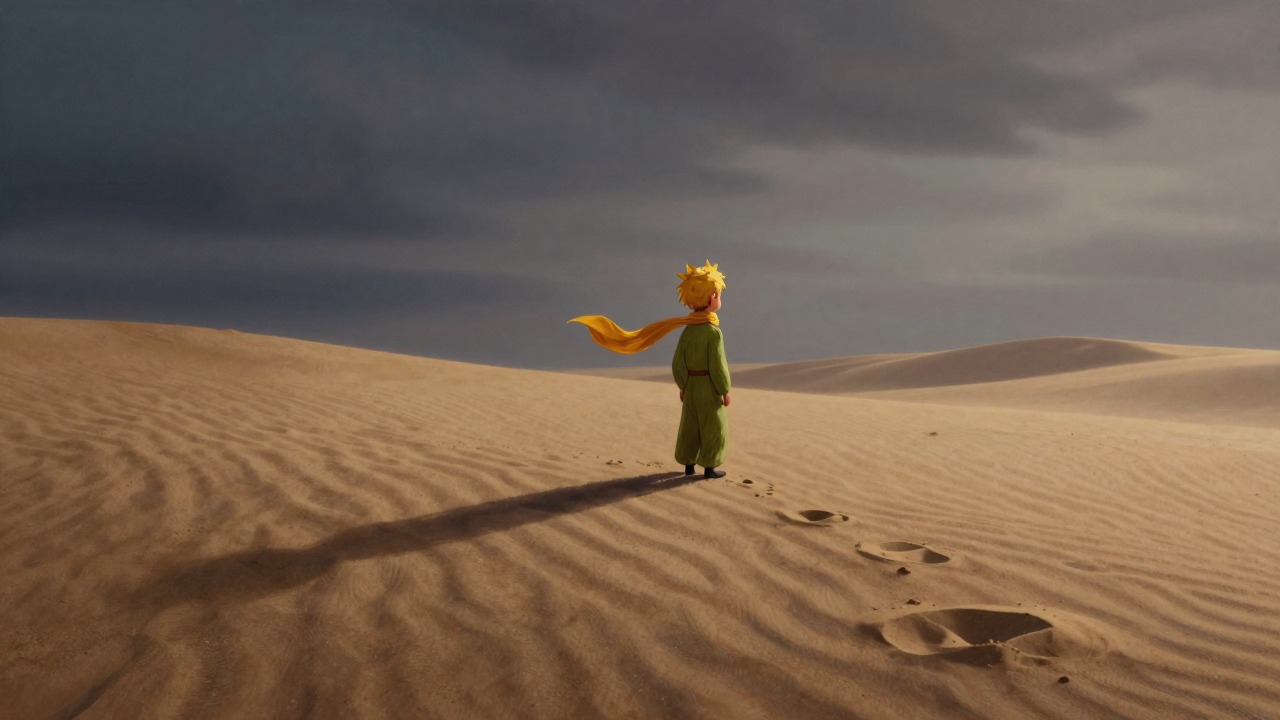
Empty Sand at Daybreak
Context
At daybreak the narrator finds no body, only the empty sand where the prince had been. The absence is both grief and proof of departure. The landscape itself becomes the silent witness to the prince's vanishing.
Development
The empty sand echoes the empty pages of a story that might never be told. The narrator reads the lack of a corpse as a sign of homecoming. The landscape tolerates the miracle without inscription.
Significance
The empty sand is the negative image of the prince's presence. It preserves the event by not preserving any trace, allowing the narrator to believe in the return.
Redrawing for Memory
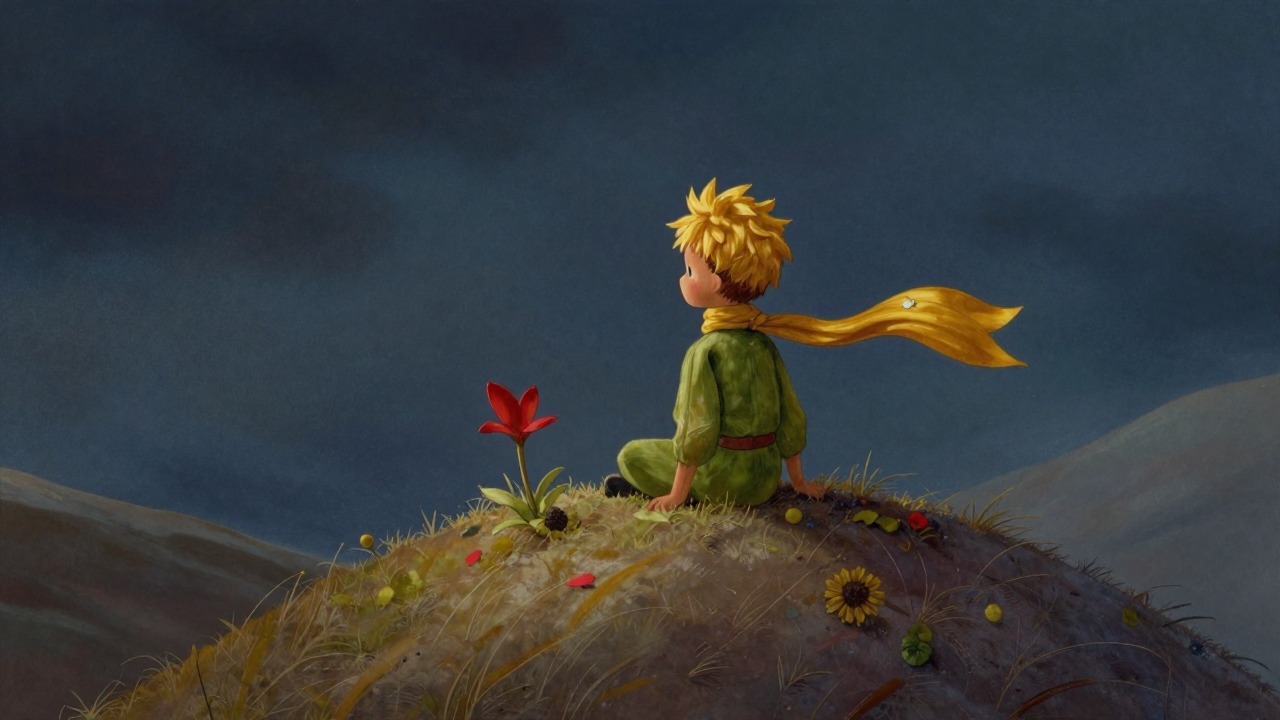
Redrawing for Memory
Context
The narrator states he has drawn the landscape again to impress it on memory. The repetition of the drawing is a deliberate memorial act, fixing the site in the reader's mind.
Development
The redrawing is identical to the earlier page but serves a new purpose: not record but remembrance. The narrator asks readers to look carefully so they would recognize it if they ever traveled to the African desert. Memory becomes a method of keeping the prince alive.
Significance
Redrawing for memory creates a permanent marker in the imagination. The landscape passes from private grief into collective memory.
Traveler's Warning
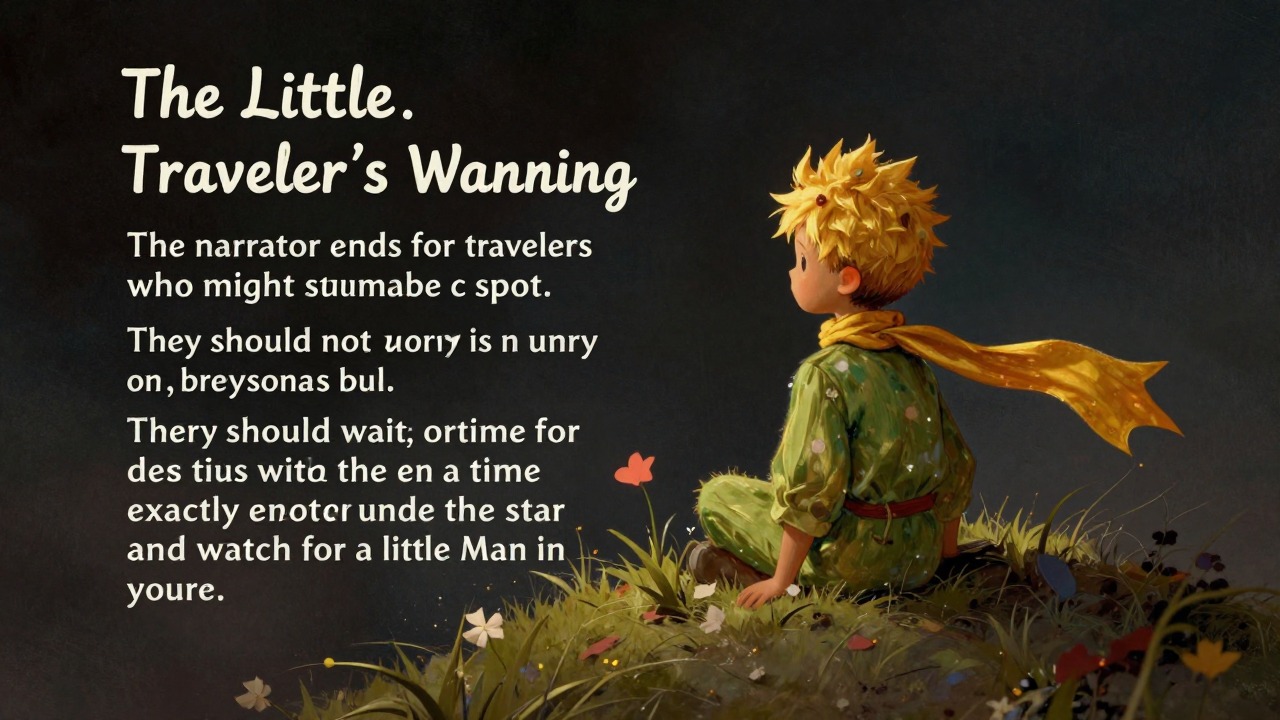
Traveler's Warning
Context
The narrator ends with instructions for travelers who might stumble upon the spot. They should not hurry on; they should wait for a time exactly under the star and watch for a little man with golden hair.
Development
The warning is a last act of love. It converts the landscape from a site of past loss into a place of future hope. The narrator entrusts strangers with the possibility of reunion.
Significance
The traveler's warning extends the story beyond the book's borders. Anyone, anywhere, could become the next witness to the Little Prince's return.
when the narrator recorded the desert meeting place after the prince's arrival
at the moment the Little Prince appeared on Earth
after the Little Prince vanished
in the epilogue, when the narrator draws the landscape again
at the final passage addressed to future voyagers
